
Dr. Jay Johannigman, M.D., FACS
Trauma Medical Director
Cincinnati, Ohio
Jay Johannigman, M.D., FACS, is a trauma and critical care surgeon based in Cincinnati, Ohio. He spent more than four decades treating critically injured patients in military field hospitals, academic medical centers, and civilian trauma programs. In November 2025, he retired from the United States Army Reserve at the rank of colonel, closing out 46 years of military service across the Air Force and the Army.
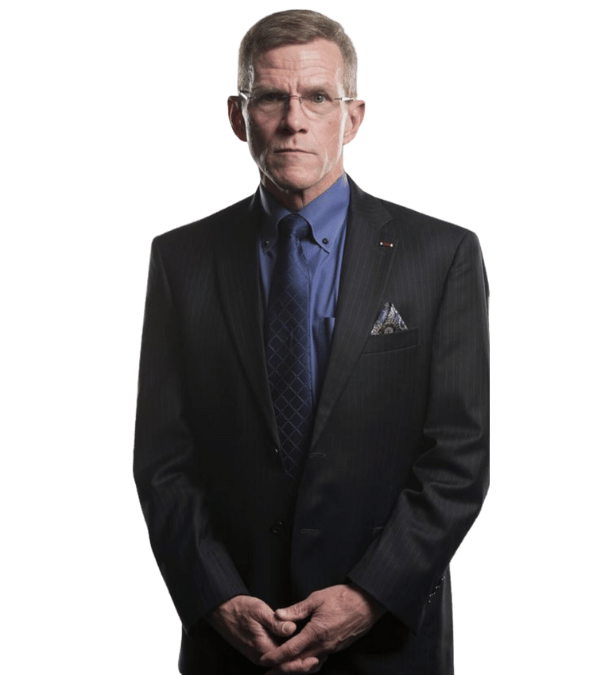
Dr. Johannigman returned to Cincinnati in July 2025, and his work now centers on regional emergency preparedness. He partners with hospitals, emergency medical services, and public safety agencies across Greater Cincinnati to build faster, better-coordinated responses to mass casualty events. He leads joint training exercises that put UC Health trauma teams in the same room as firefighters, paramedics, and emergency management officials, and he advocates for standardized protocols in the three areas that decide outcomes in the first minutes after injury: massive hemorrhage control, rapid blood transfusion, and mass casualty triage. He is also developing a geriatric injury program. Falls among older adults account for a large share of trauma volume in the region, and the program addresses prevention, treatment approach, and the complications that follow a fall in an older patient. Alongside that work, he mentors surgeons through the American College of Surgeons, advises hospitals on preparedness planning for severe weather, active shooter incidents, and large-scale accidents, and speaks at community events on practical preparedness, including evacuation planning, blood donation, and how trauma centers actually operate.
His interest in trauma medicine started well before medical school. Dr. Johannigman served as a volunteer and professional firefighter in the Ohio Valley, work that put him at the scene of injuries before he ever treated them in an operating room. He earned an A.B. in biology from Kenyon College, where he was an honor student in pharmacology and president of the Alpha Omega Alpha honor society, then earned his doctor of medicine from Case Western Reserve University and completed postdoctoral training in trauma and surgical critical care. During his military years he returned to school to complete the Aerospace Medicine Primary Course at Brooks Air Force Base and to graduate from the Air War College. He has maintained his rating as a flight surgeon.
Dr. Johannigman began active duty military service with the U.S. Air Force and later served as a colonel in the Medical Corps of the U.S. Army Reserve. He completed eight combat deployments to Iraq and Afghanistan between 2003 and 2021, operating at forward facilities including Craig Joint Theater Hospital in Bagram. His roles over those years included CCAT flight surgeon, trauma director for the 332nd Air Force Theater Hospital at Balad Air Base in Iraq, deputy commander, director of clinical services for combat hospitals, consultant surgeon for Air Force Special Operations Command, and colonel in the Office of the Surgeon General at the Pentagon.
One of his most durable contributions began at Wilford Hall USAF Medical Center, where he served as staff surgeon and medical director of the Surgical Critical Care Service. There he took part in the original formulation of the Critical Care Air Transport Team concept, a model that delivers intensive care to wounded patients during air transport out of combat zones. He has remained involved in critical care aeromedical transport ever since. His decorations include the Legion of Merit, the Bronze Star Medal, the Army Commendation Medal, and multiple Meritorious Service Medals, and he received the Distinguished Service Award from the Military Health System Research Symposium. He has also advised the U.S. Department of Defense on trauma and critical care policy.
Dr. Johannigman joined the faculty at the University of Cincinnati Medical Center in 2001, serving as director of trauma, surgical critical care, and acute care surgery at University Hospital, now part of UC Health, from 2001 to 2017. He also served as director of the Institute of Military Medicine at the University of Cincinnati College of Medicine. That same year, he played a founding role in establishing the Cincinnati Center for the Sustainment of Trauma and Readiness Skills, known as Cincinnati C-STARS. It was among the first five military-civilian strategic partnerships in the United States, and it remains the advanced training center where Air Force critical care air transport teams train alongside civilian trauma teams. The program has run continuously for more than two decades. He also led the effort that brought West Chester Hospital to verified Level III trauma center status, complementing the region’s Level I center, and served as director of its Surgical Critical Care Service and associate director of its Trauma Service.
His career later took him to Brooke Army Medical Center in San Antonio, Texas, as a trauma, critical care, and acute care surgeon, and then to St. Anthony Hospital in Lakewood, Colorado, as trauma medical director, where he oversaw a Level I Trauma and Emergency General Surgery program verified by the American College of Surgeons and designated by the State of Colorado. During his time in Denver, he built a whole blood initiative aimed at giving mountain communities access to whole blood for prehospital trauma care. In organized medicine, he has served as state trauma chair and region chief for the American College of Surgeons Committee on Trauma, and he is a member of the American College of Surgeons Committee on Trauma and the American Association for the Surgery of Trauma.
Dr. Johannigman has contributed to more than 100 peer-reviewed publications on trauma care, surgical critical care, and surgical innovation. His research interests include pulmonary failure, critical care monitoring, and closed-loop ventilation, and a 2012 study in Respiratory Care examined novel applications of ventilator technology. In 2017, the Cincinnati Reds recognized him as a Cincinnati Bell Hometown Hero on Opening Day.
The argument running through his career is that military and civilian trauma medicine solve the same problem. Systems built to move a wounded soldier from a battlefield to definitive care also move a crash victim from a highway to a trauma bay. Coordination, speed, and teams that know their roles determine who survives in both.